Undisguised Characters of My Photographs: Small and Fragile, Naked and Free
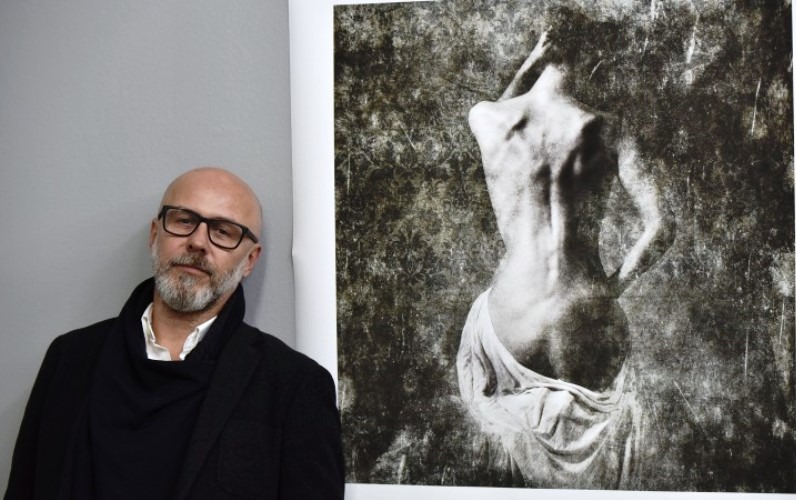
Almin Zrno’s love for photography started long ago, when, following his intuition, he knocked on the door of the famous CEDUS photography club. This introduced him to the world of his future
profession. His career has been marked by various photographic expressions. Today, he finds his expression in nudes and portraits.
One of the most important photographers in Bosnia and Herzegovina (BiH), Almin Zrno has held 18 solo exhibitions in BiH and abroad. He is a member of the Artists' Association of Applied Arts and Designers of BiH, is the author of two monographs, and is the winner of seven prestigious Collegium Artisticum awards for best photography. Zrno also has the status of a prominent independent artist of the Sarajevo Canton.
He describes himself as a completely ordinary man, in love with life and all that life offers us. He does not like to be thought of as an art photographer, but a creator, or at least trying to be so. He draws inspiration from everything around him and transforms it into his famous achromatic works.“Most of my photos are made in valerian achromatic colors so everyone could color them in their own way. Each of us, when faced with a work of art, should experience what he himself is. Such colors evoke the most empathy in me personally because my dreams are also made of such colors,” explains Almin Zrno.
He had been involved in documentary photography for a long time before one of his most famous works, Mother of Srebrenica (2001), marked a turning point in his artistic work. Because of this work,he decided not to pursue the genre anymore.

“The photograph Mother of Srebrenica was taken in 2001. After I took it, I realized that I couldn’t build my happiness on someone else’s misfortune, because no war photo has ever stopped a war. We are constantly questioning the past and doing historical revisionism… but art's place is not there, it is somewhere else. If I continued to work in that direction, I would annul myself, which would lead nowhere,” he says.
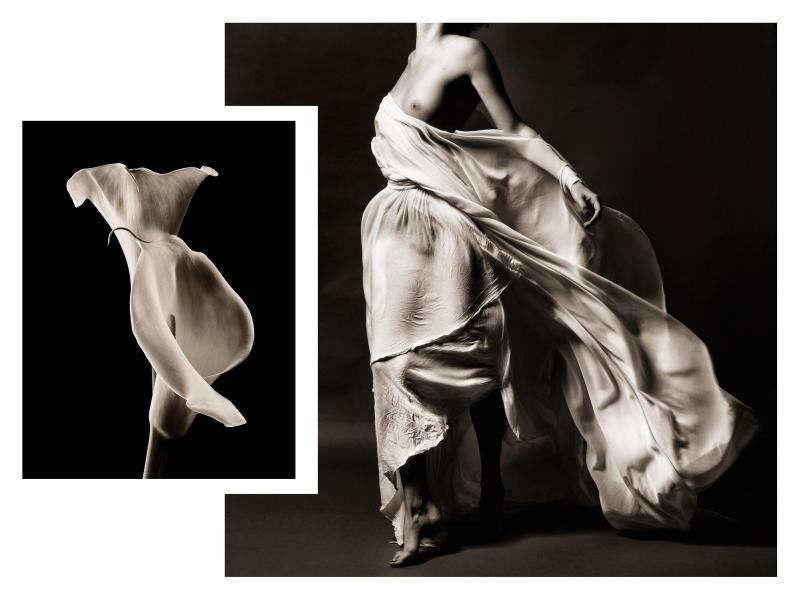
Atypical for this region is Zrno’s creation of his Apology of Eros monograph. It consists of 53
photographs divided into two cycles – ‘Fresco’ and ‘Nude’ – and two professional texts written by Professor Dr. Amela Hadžimejlić and Professor Dr. Fehim Hadžimuhamedović.
He adds that his photography cycles, through certain gestures and poses, suggest certain emotional states, forcing us to celebrate love and freedom, thus counterbalancing the nonsense of the world we are surrounded by today.
Through the promotion of himself and his art outside Bosnia and Herzegovina, he also promotes the country he comes from. In this way, he tries to break down stereotypes about this area.
“I try to raise awareness of certain taboos in our society and break down prejudices. The issue is that some people have limited art to what is dark, negative. They insist that art can only be of that realm, and we are all expected to follow suit. I hope that one day we will reach the level of freedom at which we can truly be free,” he says.
Almin Zrno does not consider photography a job, but a love, and for him love is not possession but
giving. In fact, this has become his personal maxim. “As soon as the desire to own something appears, it is no longer love,” he says.
Post a comment