Sarajevo’s Sleeping Lions
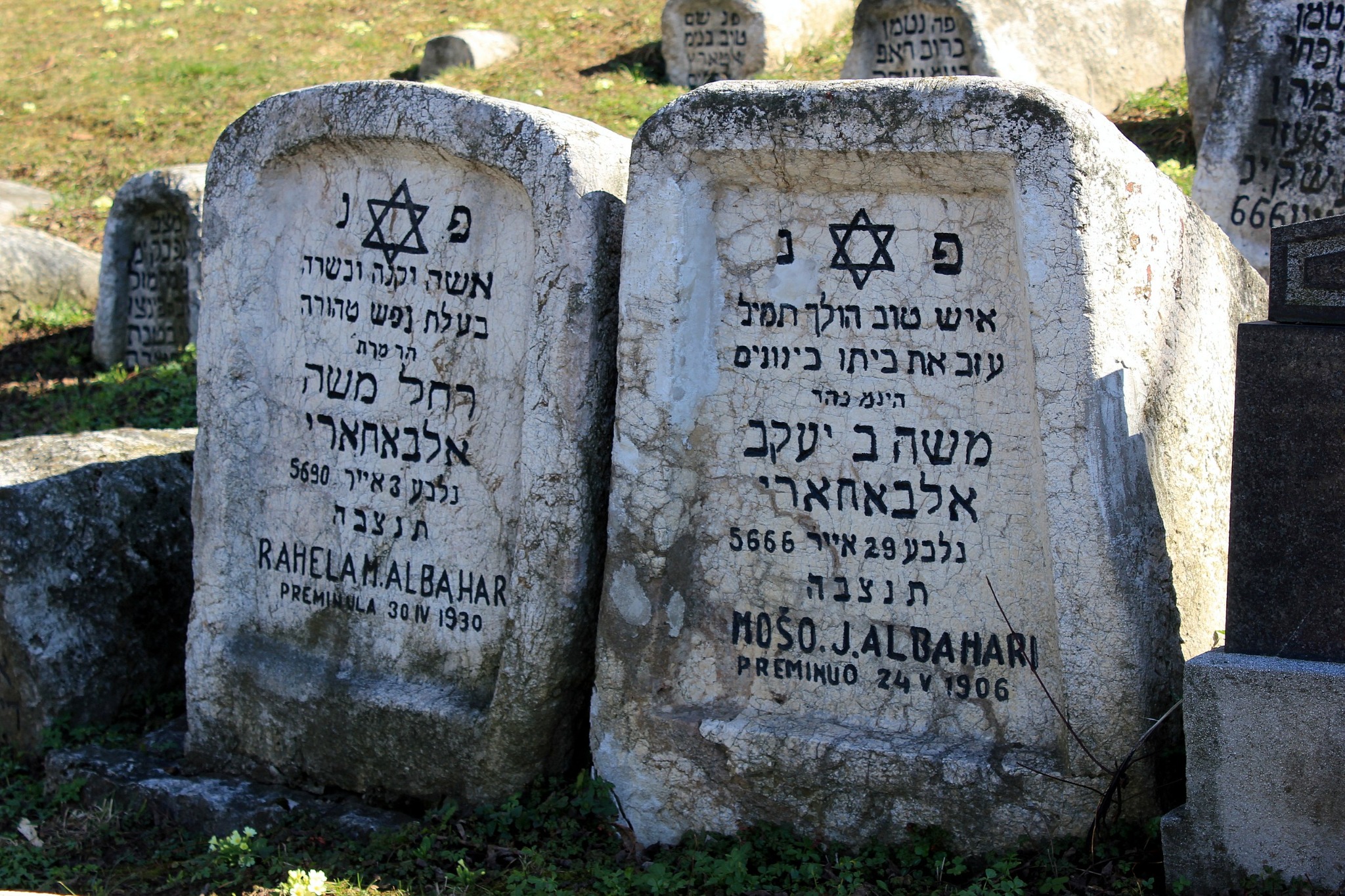
For five centuries, on one of Sarajevo's many slopes, one could find Jewish tombstones testifying to the dead and to the living. The “sleeping lions,” as Nobel laureate Ivo Andrić called them, make up a sacral complex never before seen in the world. This is the second largest Jewish cemetery in Europe.
The Jewish cemetery in Sarajevo is, after Prague, the second largest Jewish cemetery in
Europe. It was built next to the medieval necropolis of stećak tombstones at the Borak site,
next to the old quarry on Šatorija, from which stone was extracted both for medieval stećak
tombstones and for Jewish tombstones that are unique in their shapes and motifs.
“We do not have accurate data on the establishment and development of the cemetery.
Therefore, the year of its founding is 1630, because the oldest tombstone found there dates
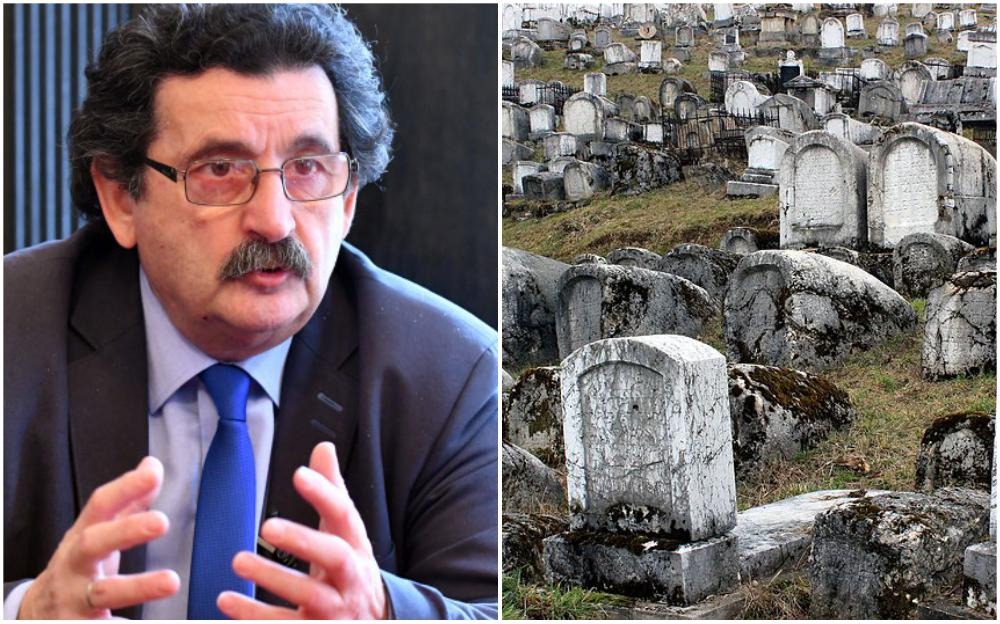
back to Sarajevo rabbi Samuel Baruch,” explains Eli Tauber, advisor for culture and religion
of the Jewish community in Bosnia and Herzegovina (BiH).
The Jewish cemetery can be entered through three gates, and it has about 3,800 tombstones
that were first made of Sarajevo limestone, and later of marble or granite. Within the cemetery
there is a cemetery chapel called “Ciduk Adin,” a memorial ossuary from 1952, a monument
to the victims of Ustasha terror, and an Ashkenazi ossuary. The entire sacral complex was declared a national monument of Bosnia and Herzegovina on September 2, 2004.
“What is specific for this cemetery is the monolithic monuments that are associated with
stećak tombstones, and as such we cannot see them in any Jewish cemetery in Europe or the
Middle East. Of course, since this cemetery was built next to the necropolis of stećak tombstones, it is assumed that the idea to make such types of monuments came from looking at stećak,” explains Tauber.
Symbolism in the Jewish Cemetery
Tauber points out that the decorative motifs on the stones have multiple symbolic meanings.
“There are figural images, as well as geometric and plant ornaments. For example, a stick
means a sacred face, an egg is a symbol of life and death, while a crescent is a symbol for
moving towards the final destination of the soul,” he explains.
The exceptional value of Jewish tombstones is their epigraphy, which consists of the name
and surname of the deceased, date of birth and death, a short text about the life and work of
the deceased, and sometimes verses and quotations from the Jewish tradition.
“The most interesting monument is certainly one of Zekko Efendi Rafaelović, who was
educated in Istanbul. He was the main translator of the Turkish language in BiH and one of
the founders of the Jewish cultural and educational society, ‘La Benovelencia.’ His unique
tombstone containing epitaphs in three languages - Bosnian, Hebrew, and Turkish – is the
only one in the world. There is no monument in the world that has been written, primarily in
three languages. And secondly, it is not known at all whether there is any monument in the
Jewish cemetery written in Turkish,” Tauber explains.
Unfortunately, the cemetery is in a very bad condition, because a large number of the
tombstones are damaged. Some were destroyed during the last war, while many others fell
victim to everyday vandalism.

Who Takes Care of One of the Most Important Monuments in BiH?
A member of the Jewish Youth Club and a student of the Academy of Fine Arts in Sarajevo,
Ensar Hadžić, says that BiH as a country is a monument itself – a monument of human values,
togetherness, coexistence, and tolerance.
“However, everything that is not maintained collapses and, over time, both physical and
spiritual heritage starts vanishing. Caring for the preservation of cultural and historical
heritage in BiH is the job of every citizen,” he says.
In 1958, the remains of the Ashkenazi cemetery, which was located in Koševo, were moved
to the old Sephardic cemetery. The cemetery was closed for burial in 1965, and since then
Jews have been burying their dead in Sarajevo's city cemetery.
The Jews consider their cemeteries holy places, calling them the house of graves, the house of
life, and the house of eternity. Their house in Sarajevo is a cultural gem of Bosnia and
Herzegovina worthy of protection.
Post a comment